
Source - Sink Dynamics
It important to understand this dynamic when training espalier fruit trees. This explains why removing (pruning) or moving buds (attached to branches you bend) modifies where the grows occurs. It explains:
Why growth starts in certain areas of each tree first thing in the spring
Why pruning or bending branches during dormancy modifies where spring growth occurs
Why various training techniques used at different times throughout the growing season causes specific reactions
Why developing fruit results in less branch growth
Sources
Sources are locations of production and reserve storage of carbohydrates (energy) in the tree. During dormancy carbohydrates are stored as starch in roots, trunks, and branches.
Sinks
Sinks are parts of the tree that draw sugars, water and nutrients and plant hormones from sources for shoot and fruit growth.
First growth in the spring:
As as temperatures increase in spring, stored starch is converted into soluble sugars which can be transported throughout the tree to support growth before and during bloom.
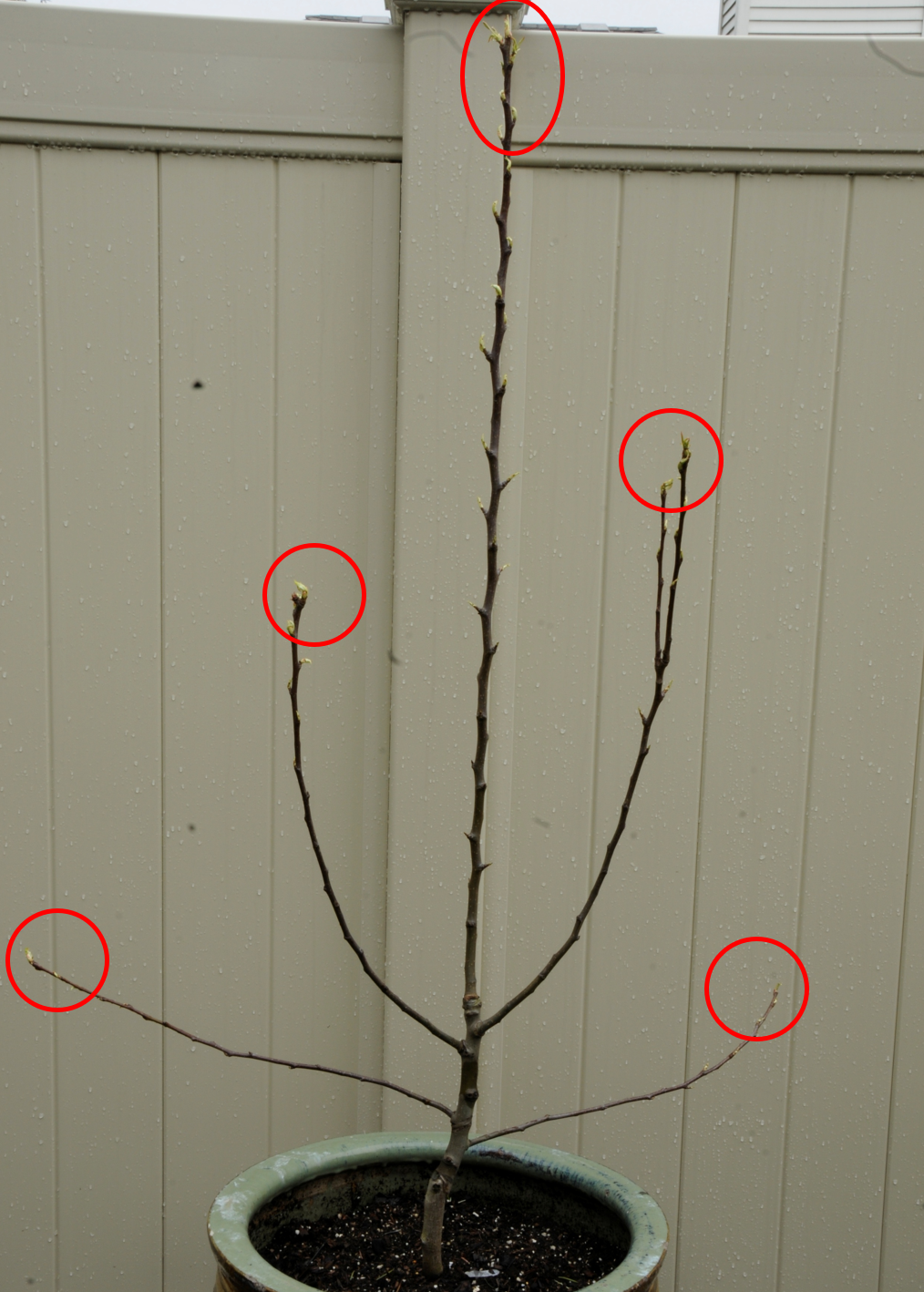
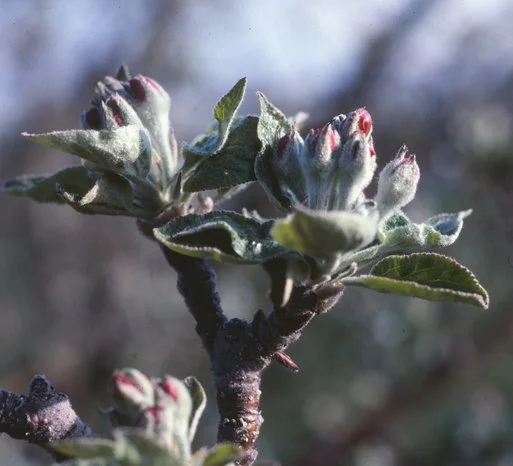
First active sinks in the spring are the apical buds of the highest shoots on the tree and a few buds just below them. These buds draw water, sugars, nutrients and Cytokinins from the roots and atart to grow. The buds below the apical bud are able to grow as there is no apical dominance before growth starts.
The second locations to become sinks are the fruit buds that developed the year before. They swell and the blossoms they contain develop in preparation for bloom
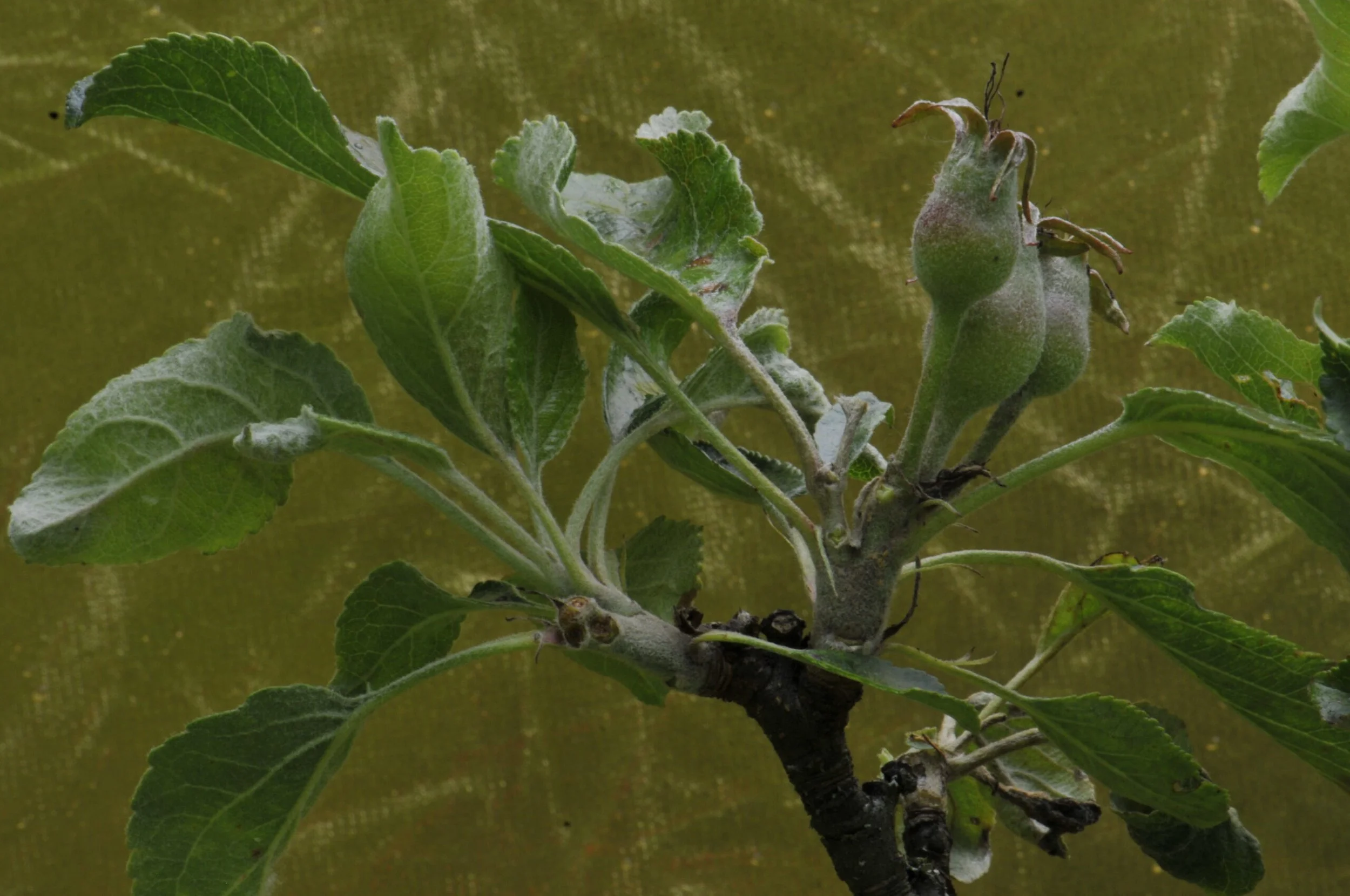
After bloom:
the young fruit become sinks and they remain strong sinks till harvest
some vegetative buds become sinks as they start to differentiate into flower buds for the following spring
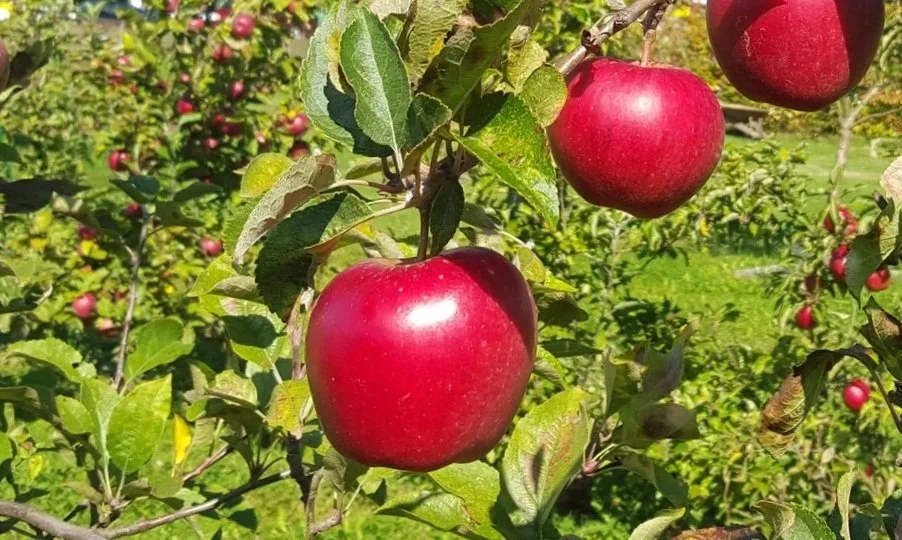
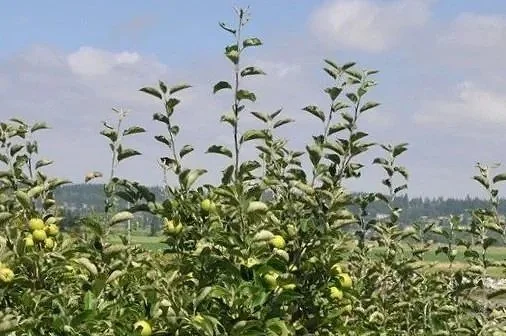
Through the summer the primary source for fruit growth shifts to the full sized leaves attached directly to the fruit spurs. These spur leaves need to receive direct sunlight for optimum development of this years fruit and fruit buds to the following years.
Leaves on new shoots initially only support their own growth. 3 - 4 weeks after bloom, as the first of the new leaves mature and these leaves become sources for the rest of the tree
From early summer through to the start of dormancy in the fall, leaves are also sources for moving sugars into storage in the roots, trunk and branches preparing for the next spring.
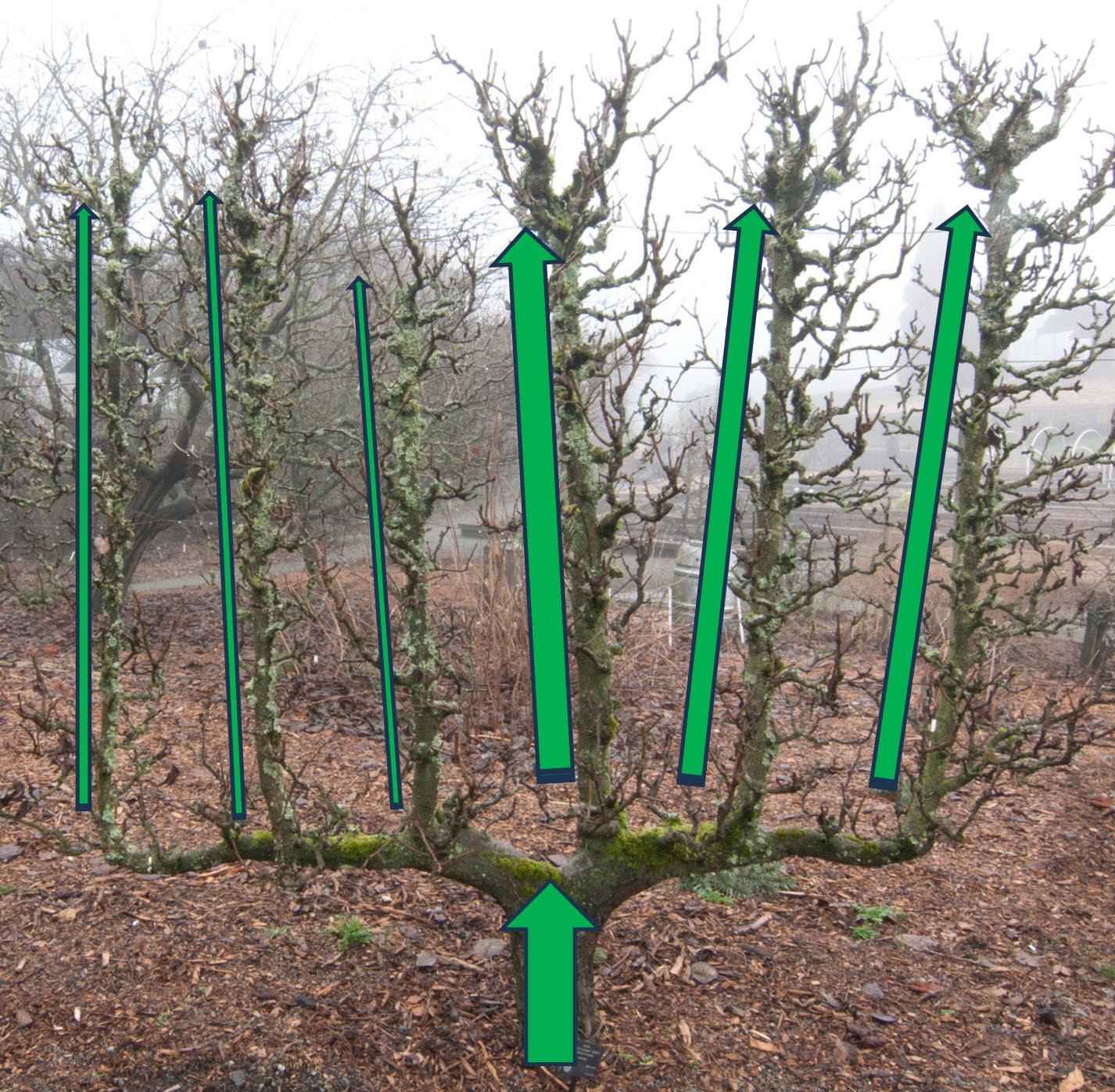
Sink -Source Results Explained
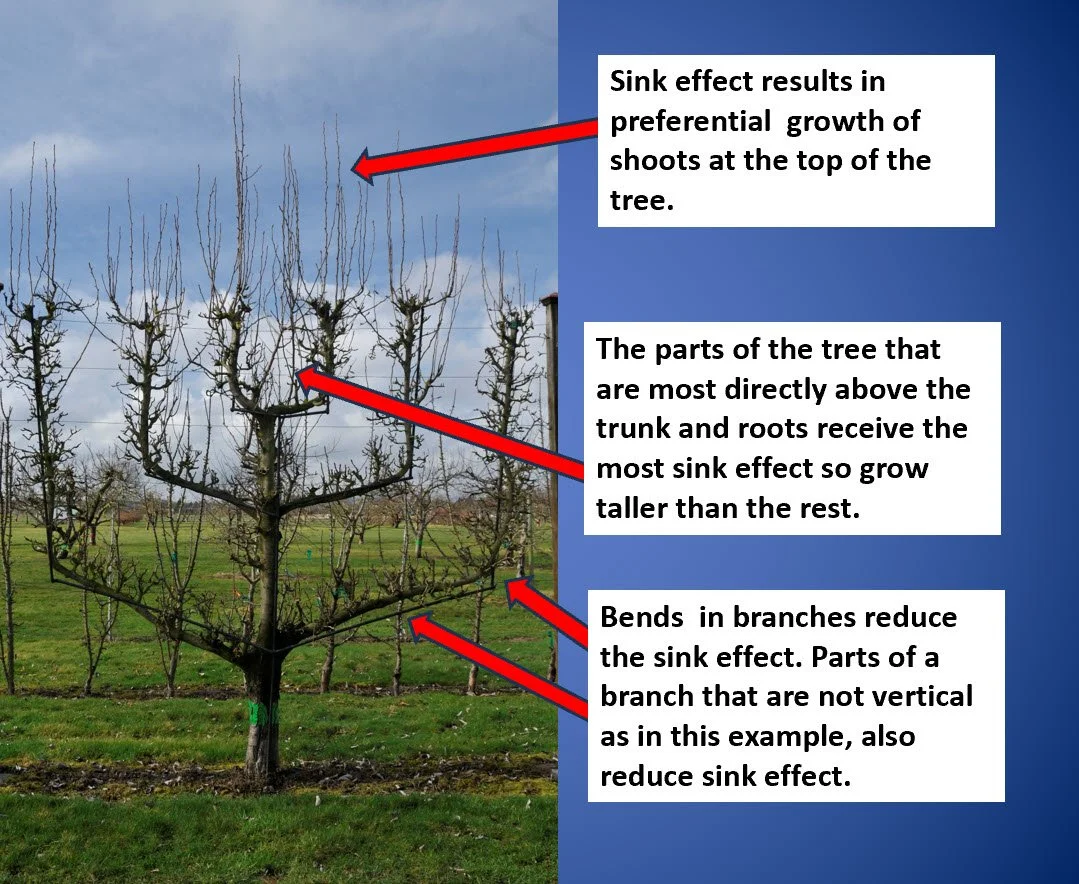
In the above image the width of the green lines indicates the strength of the sink effect moving upward through that branch. Buds at the top of vertical branches directly above the roots, are always stronger sinks than branches that are off set.