
Apical Dominance
Apical dominance is the physiological phenomenon in plants where the apical bud of a vertical shoot inhibits the growth of lateral buds lower on the current seasons growth. Plant Hormones inside the trees cause Apical Dominance.
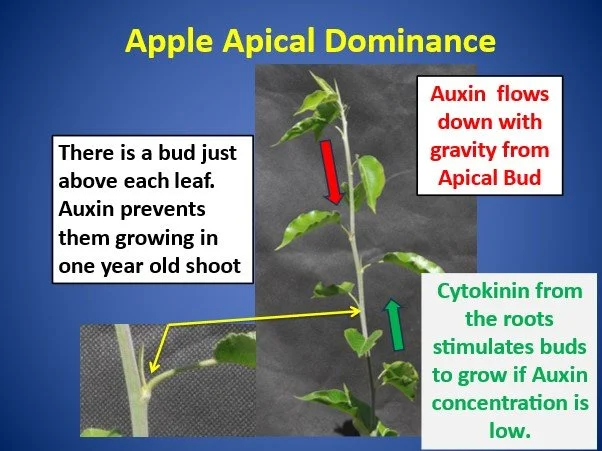
Key aspects of Apical Dominance for Espalier Tree Training:
it is strongest in vertical shoots
most tree training techniques are designed to modify it
It naturally modifies the angle of attachment of lateral shoots attached to previous years growth.
it is only present during the growing season from the start of growth in spring till dormancy in fall.
Branch Angle of Attachment
Even though the auxin in the main stem cannot inhibit the growth of lateral branches that are already growing, the auxin does affect the angle of attachment of new lateral branches. The laterals closest to the apical bud that are exposed to the highest concentration of Auxin will develop upward angles while lower branches form angles closer to horizontal.
This phenomenon can be used to develop flat angled branches for espalier designs like U’s and Stepovers.
Apical Dominance of Common Temperate Fruit Trees
Very Strong Apical Dominantce
Apples, pears, sweet cherries apricots, plums, quince, figs and medlars.
Moderate or Low Apical Dominance
Peaches, Nectarines and Almonds
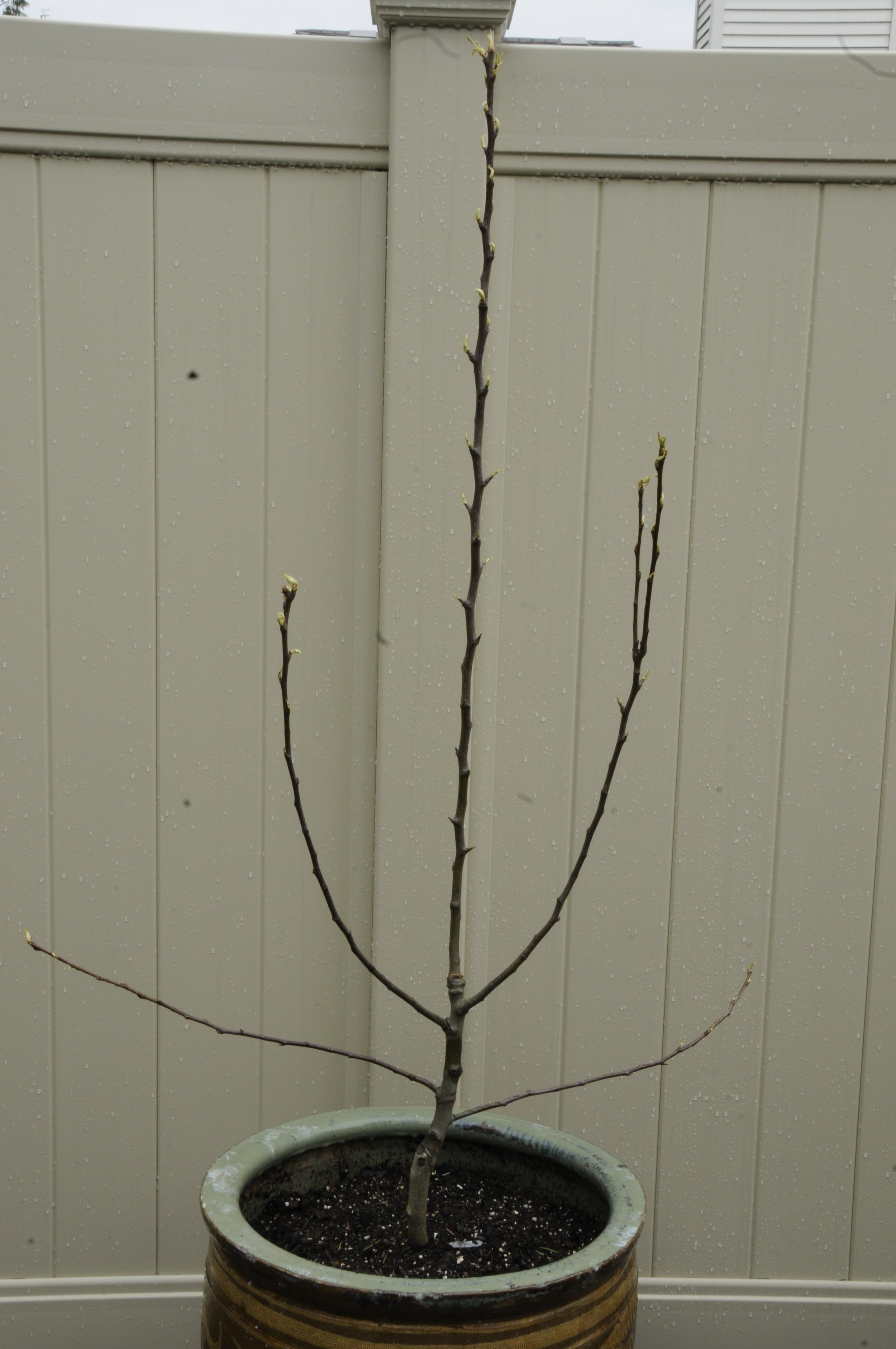
This apple is a great example of strong apical dominance. All branches are on the previous years growth, no branches on current seasons growth. Also not the angle of attachment of branches.
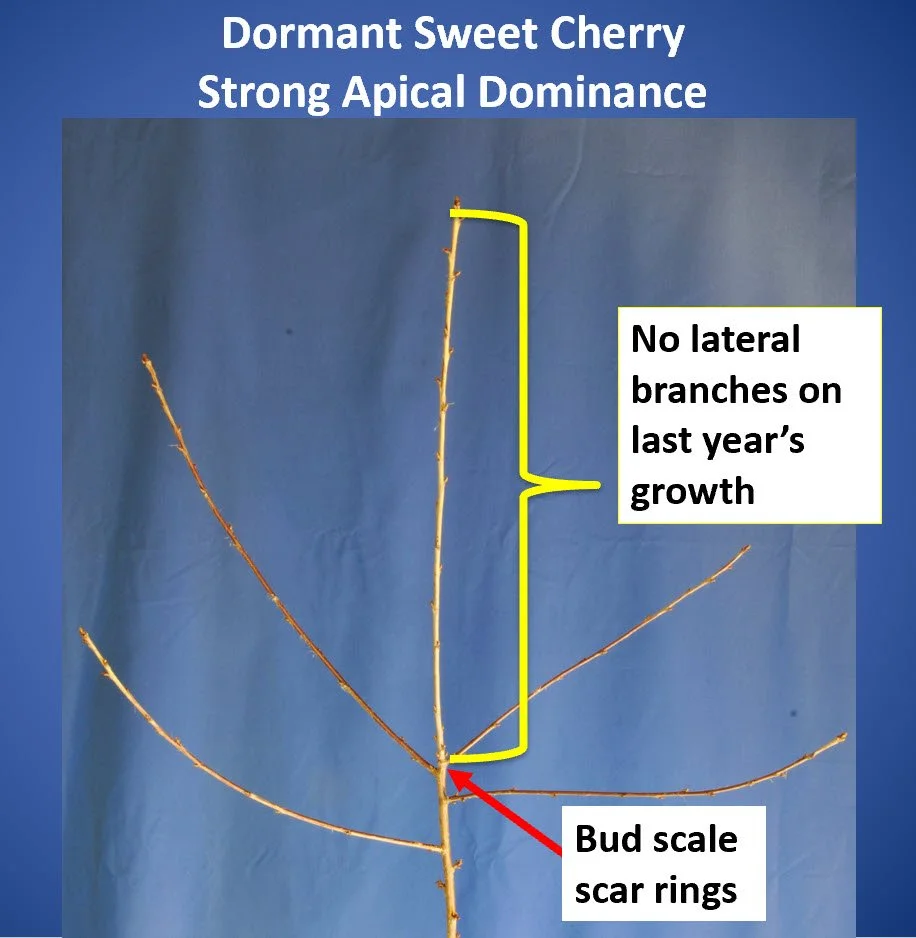
Note the angle of attachment of the lateral branches. The highest branches are attached at more upward angles. Lateral branches are all attached to 2 year old wood.
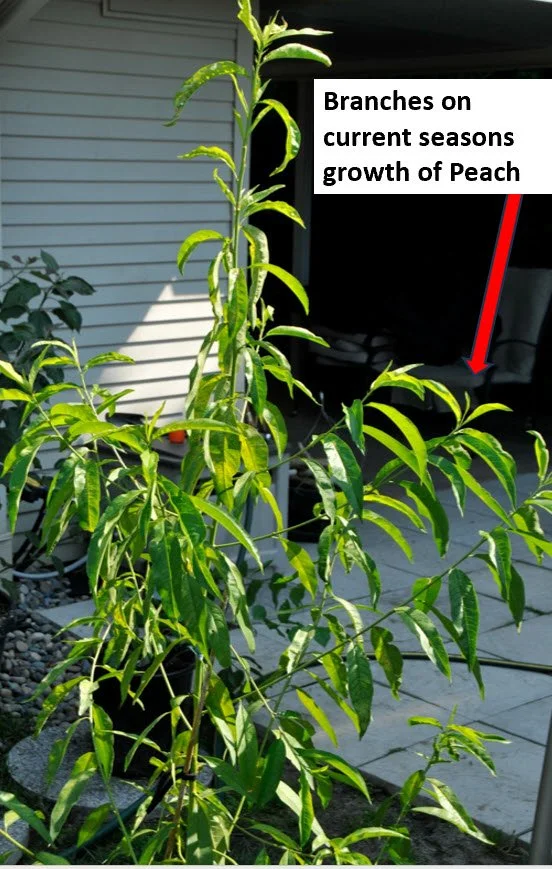
Peaches, Nectarines and Almonds all have low Apical Dominance so they produce multiple lateral shoots on current seasons growth. Since a dormant bud is not produced before these lateral shoots start to grow there are no bud scale scar rings at their base as most shoots do.