
Buds, Nodes, Internodes
Tree training instructions are easier to understand if you know the names and ages of parts of the tree.
Click on the images below to enlarge them
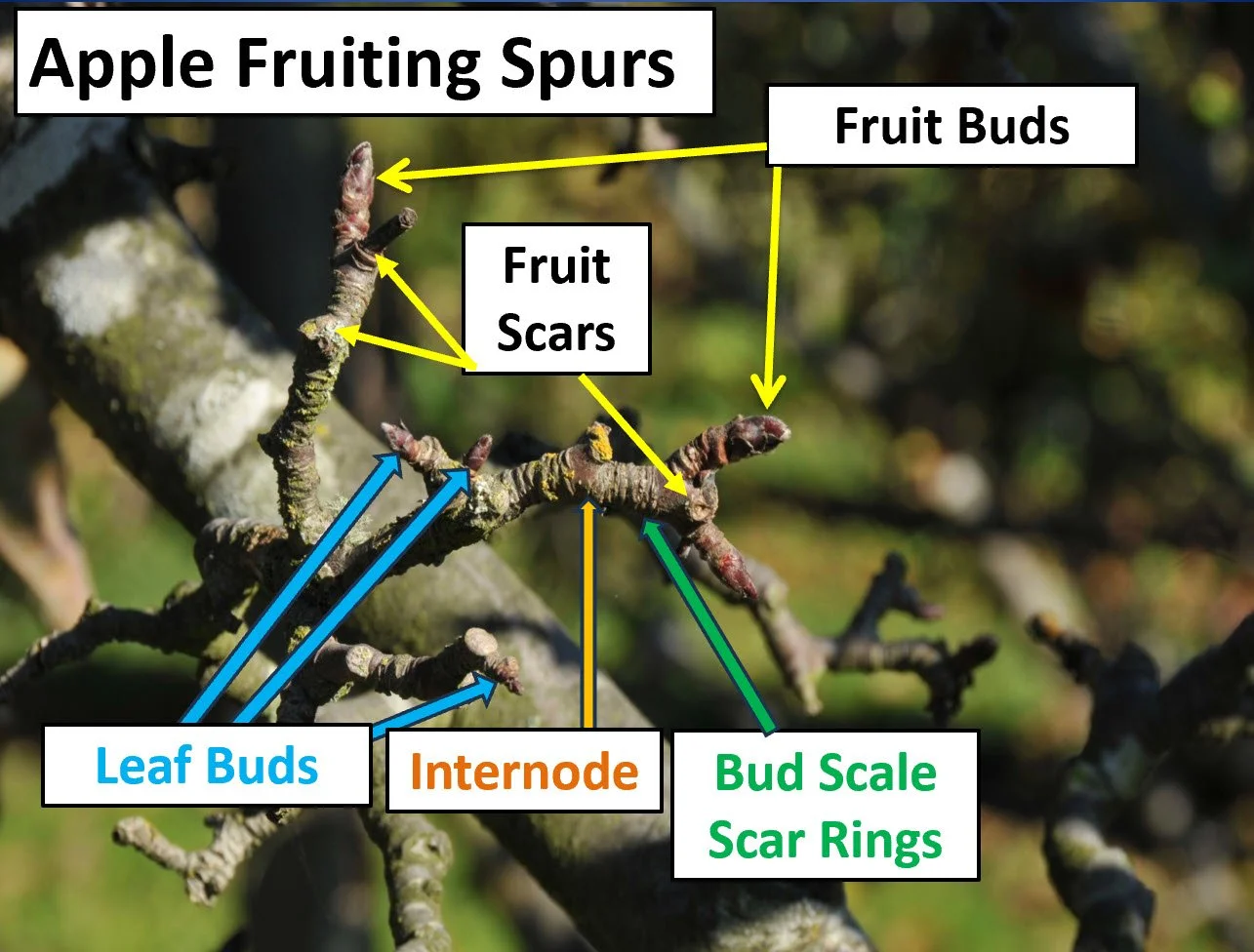
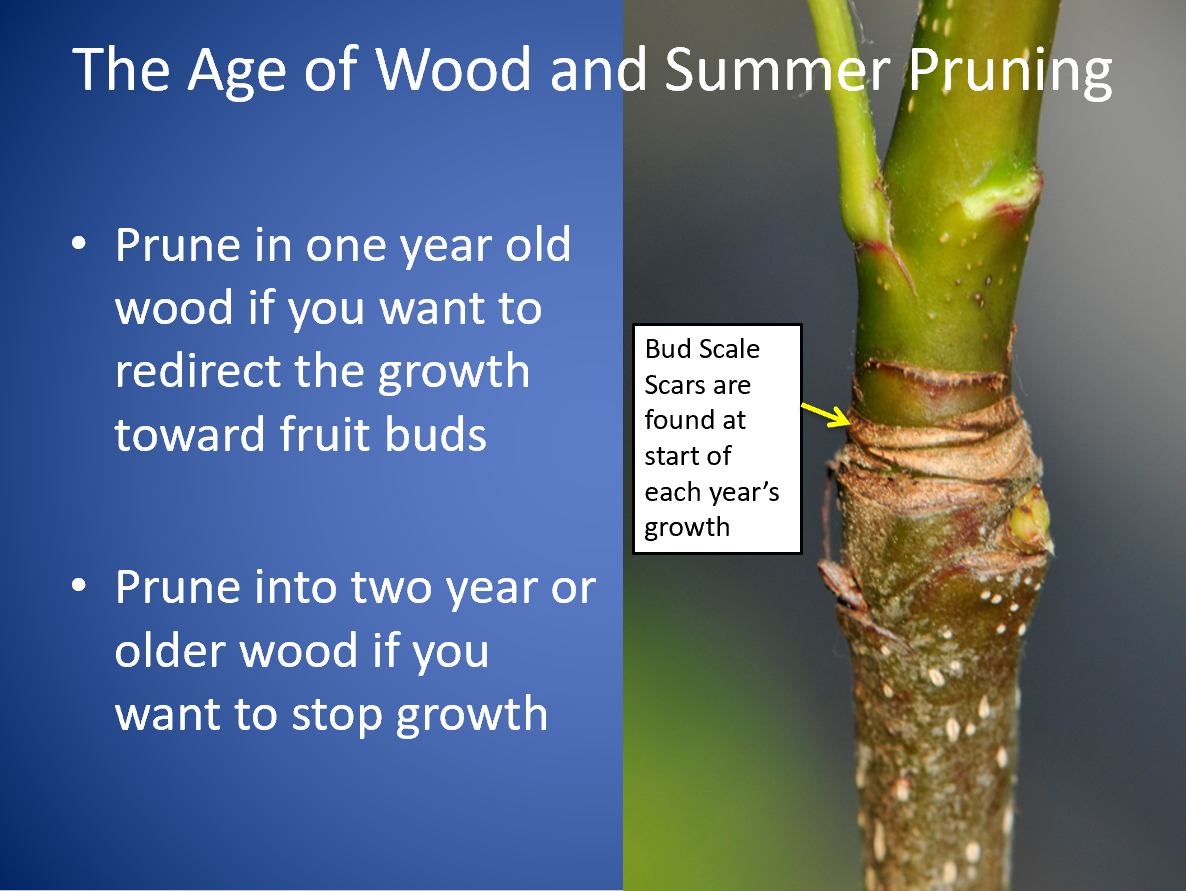
Fruiting spurs like this one usually produce well between 2 and 5 years of age. After 5 years the spur should be pruned back to reinvigorate it. This image also shows the difference between fruit buds and leaf buds. Leaf buds are narrower and pointed. fruit buds are plump and rounded. Note the bud scale scare rings that mark the end of one year of growth and the start of the nest year.
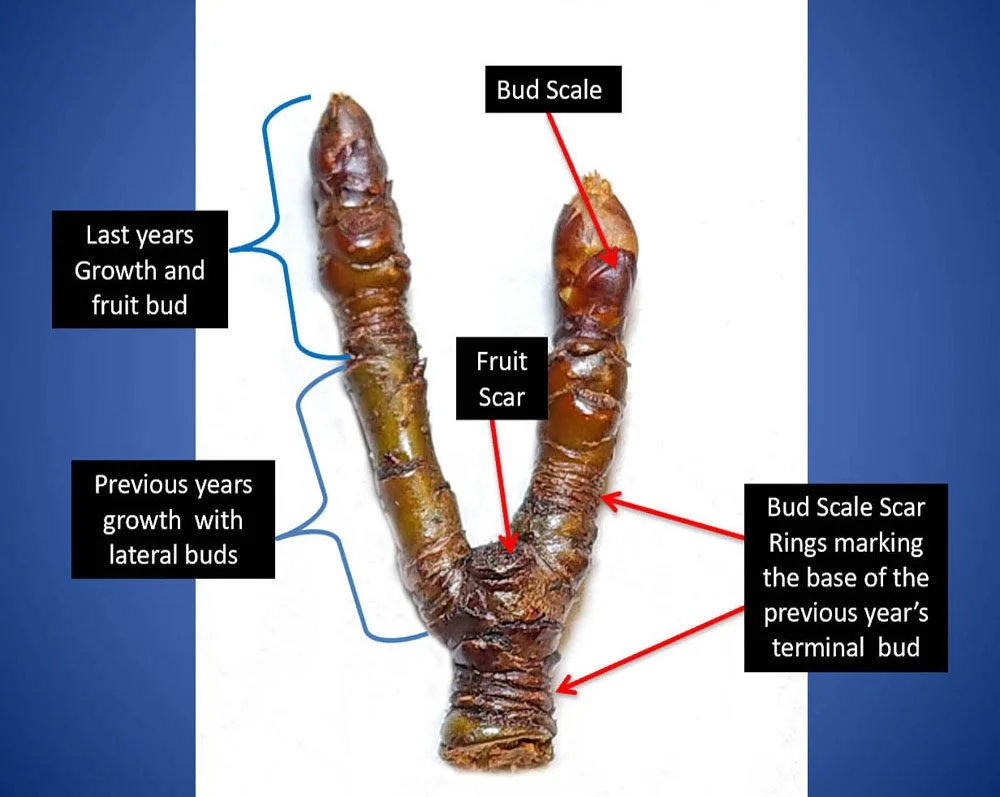
This is an apple spur with two fruit buds. Spurs grow slowly, often 1/2" (1 cm). Note the bud scale scare rings and fruit scar.
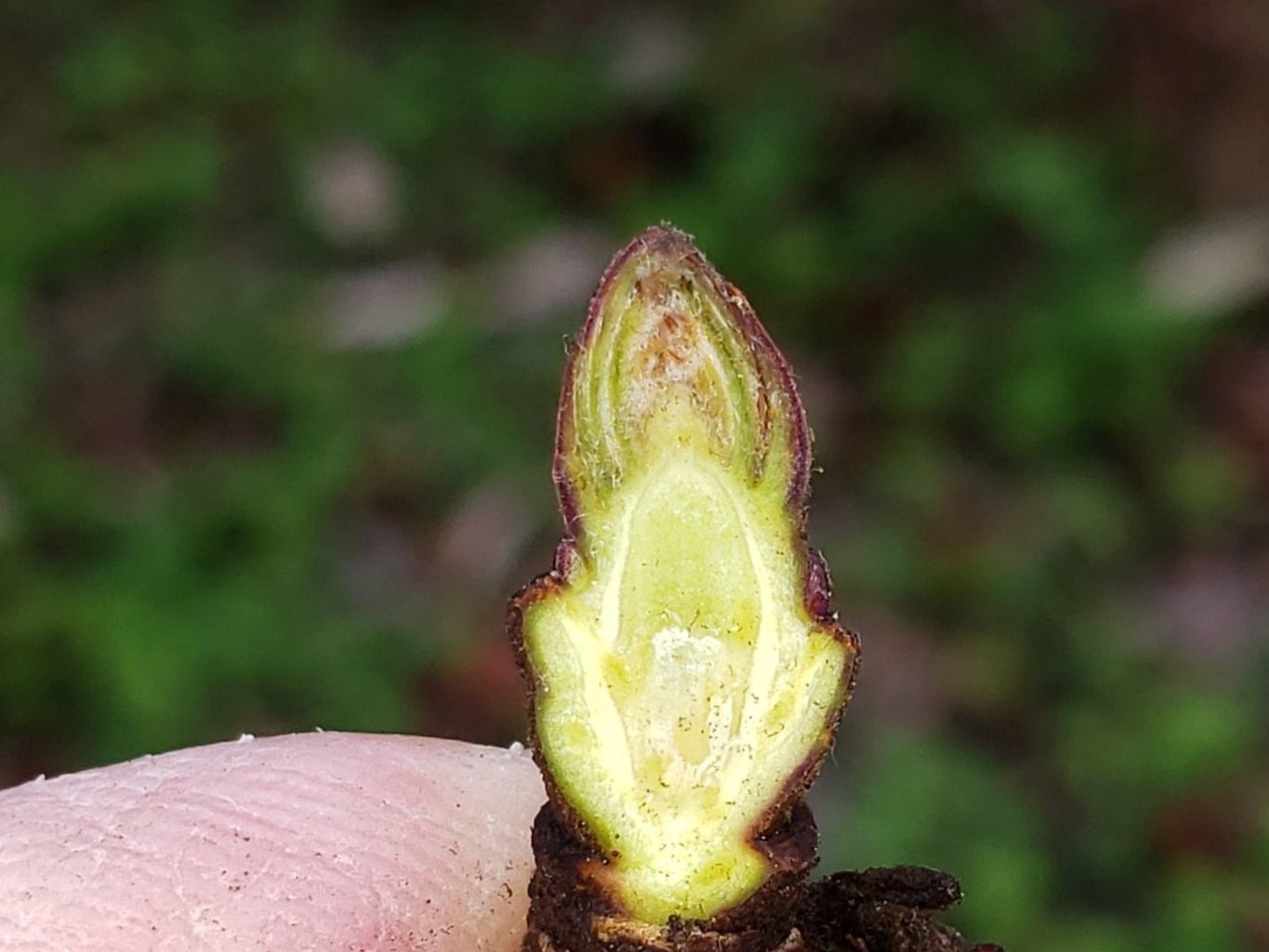
This is a cross section of an dormant apple fruit bud near the end of winter. The developing flower parts are the bit of red color just inside the top of the bud. At this time of year fruit buds start to swell.
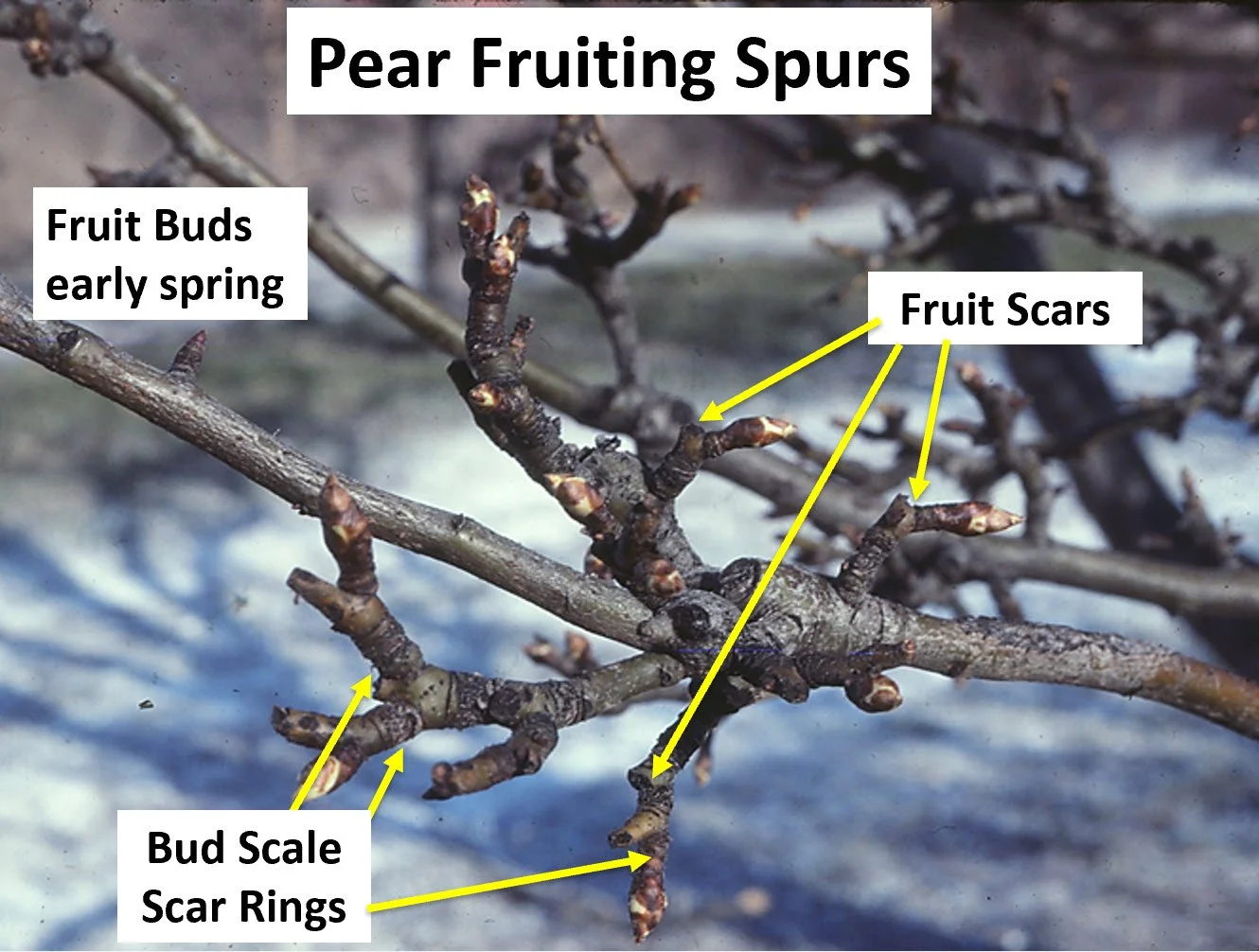
These are European Pear fruiting spurs, fruit buds, leaf buds (small ones) and scares from fruit that grew on this tree last year.
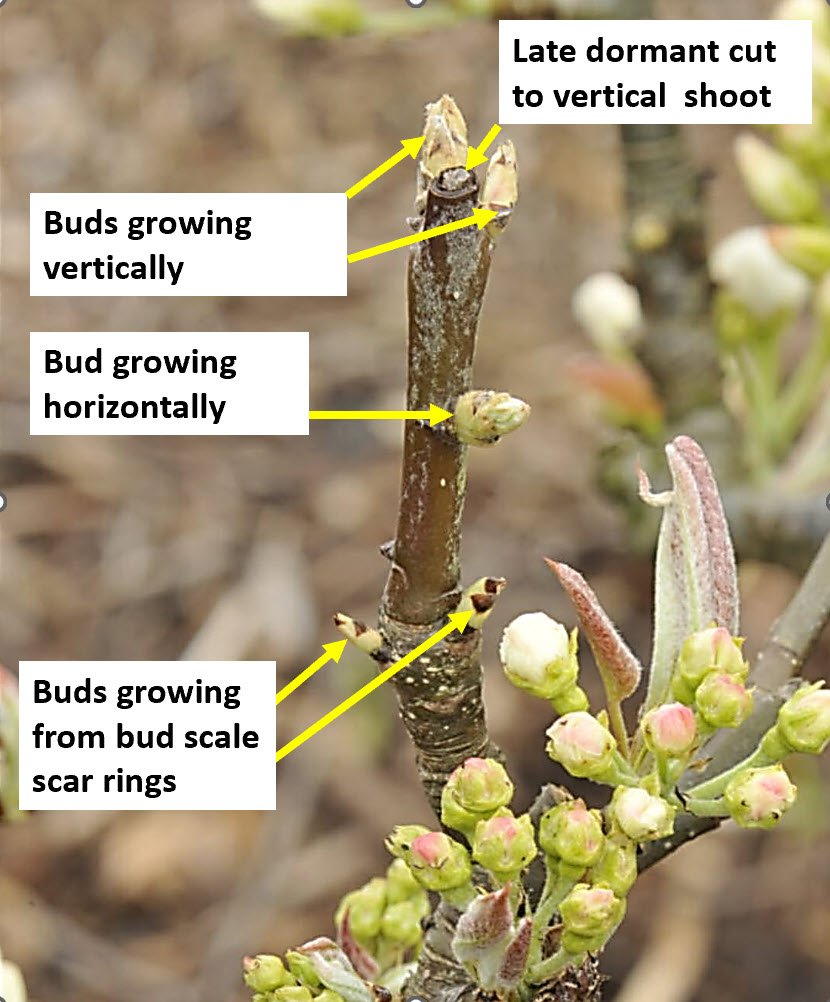
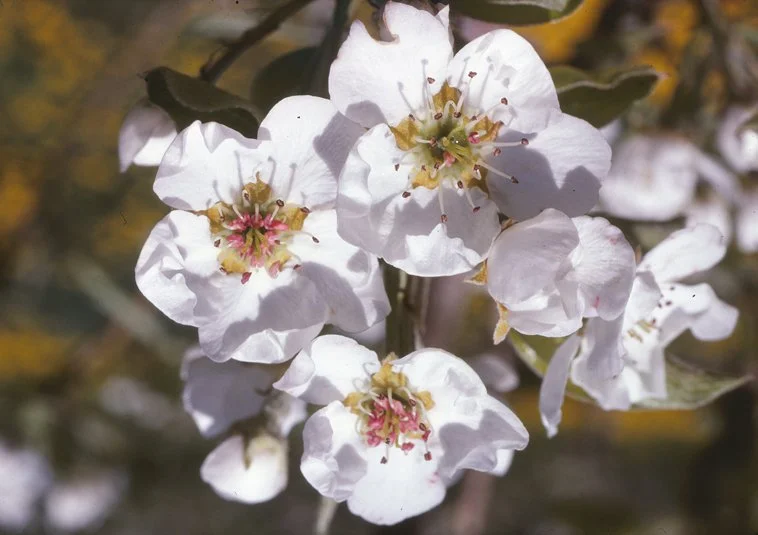
This is an Asian Pear just coming into bloom. The small vertical shoot has an apical bud and two lateral buds, all leaf buds. There are also two small beds emerging from the bud scale scar rings. The small buds in the rings is a exactly what in desired for excellent cordon training. Each flower bud usually contains 5 - 7 buds, in this image the flowers have already emerged from the overwintering buds.
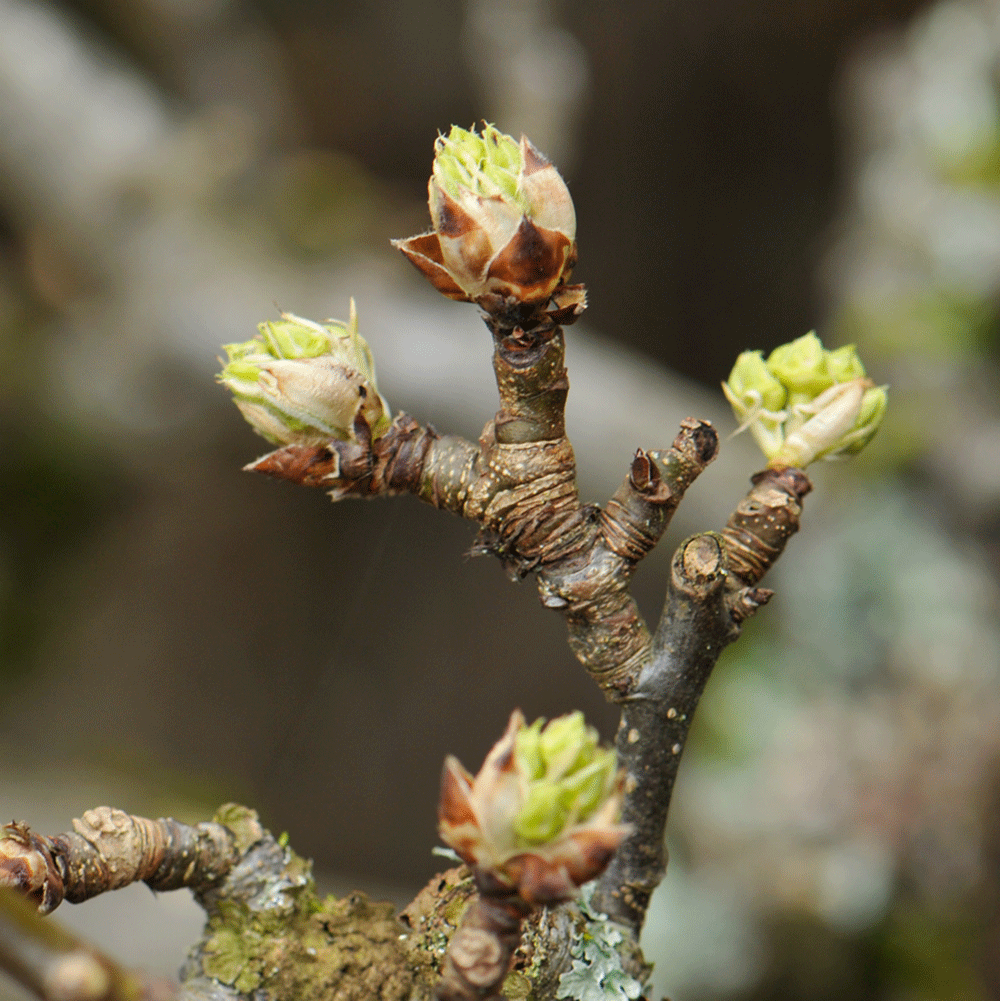
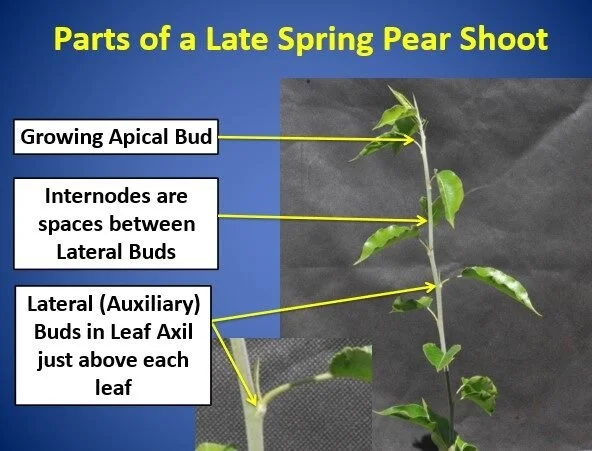
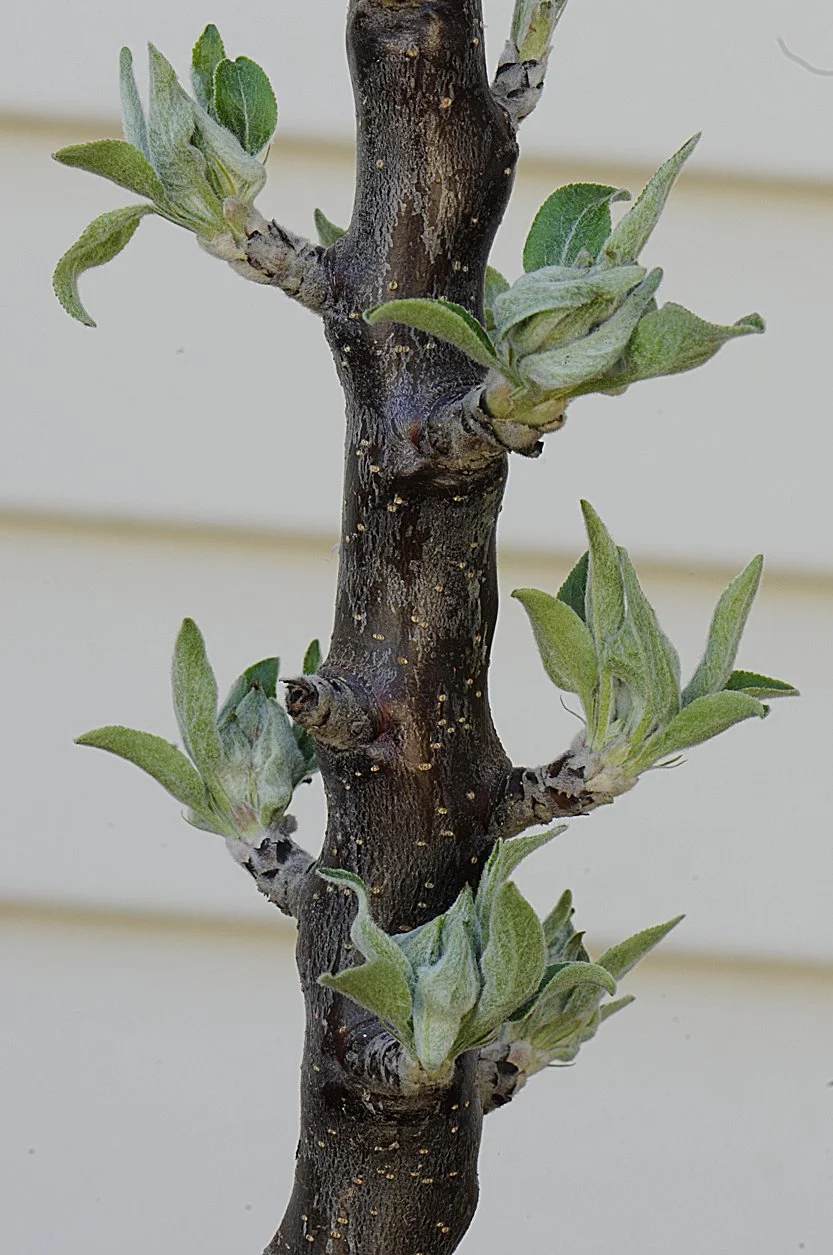
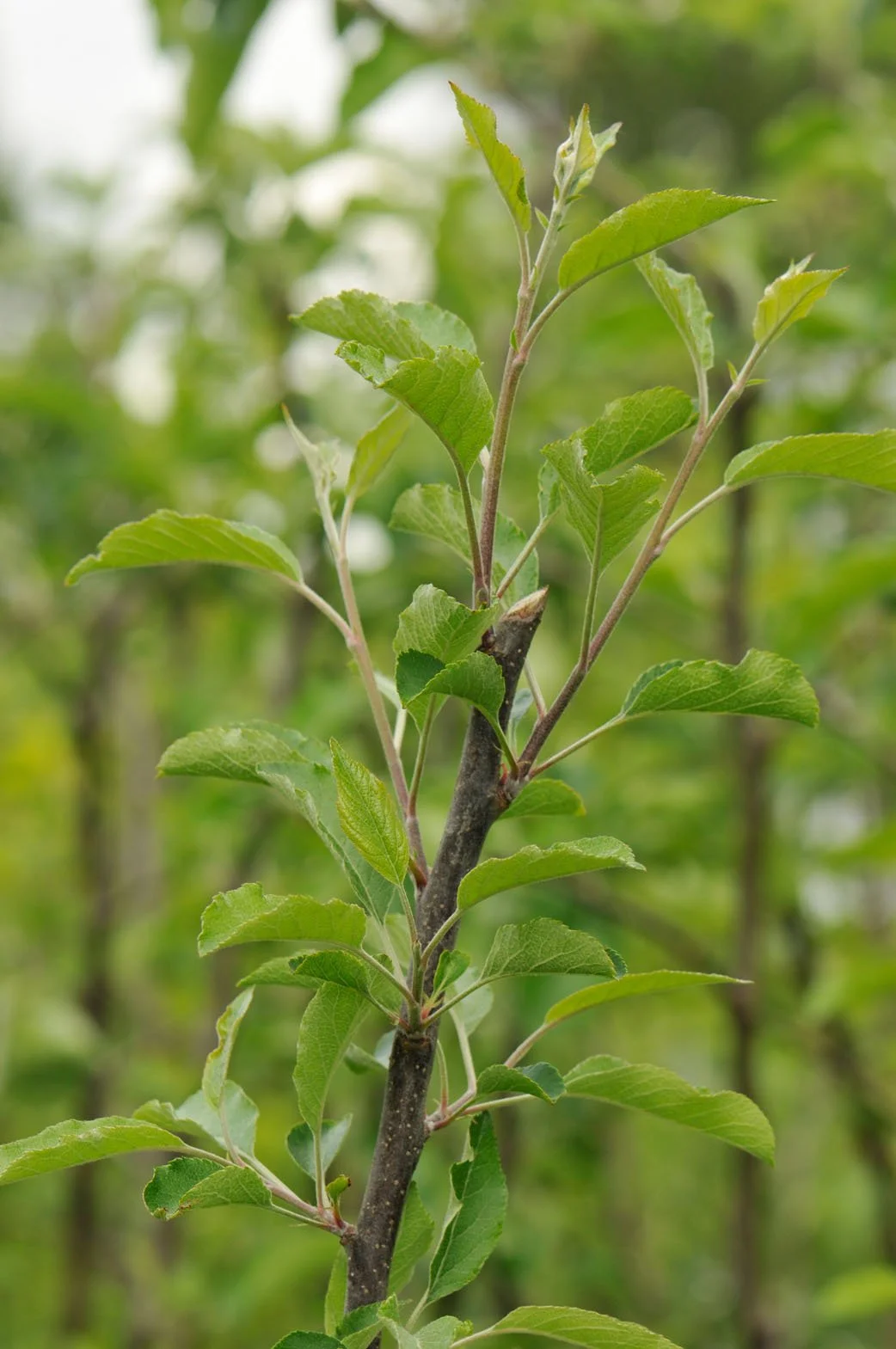
This is a new European Pear shoot mid spring. There in one vegetative lateral bud in each leaf axil. The leaf axils are the nodes.

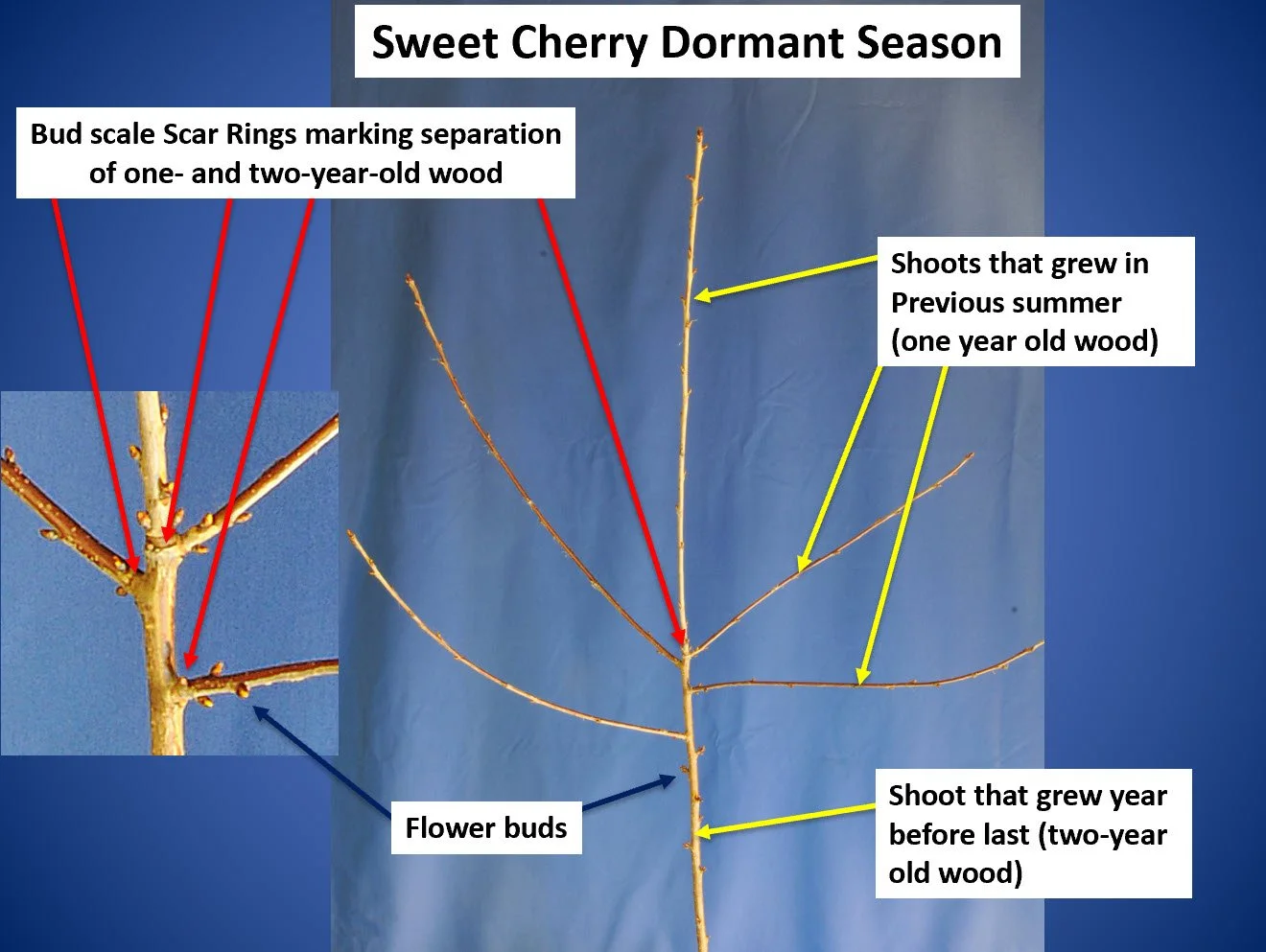
This sweet cherry branch has fruit buds at most nodes on two year old wood and at nodes on the bottom half of the previous years growth. The location of each bud along the shoots are called nodes.
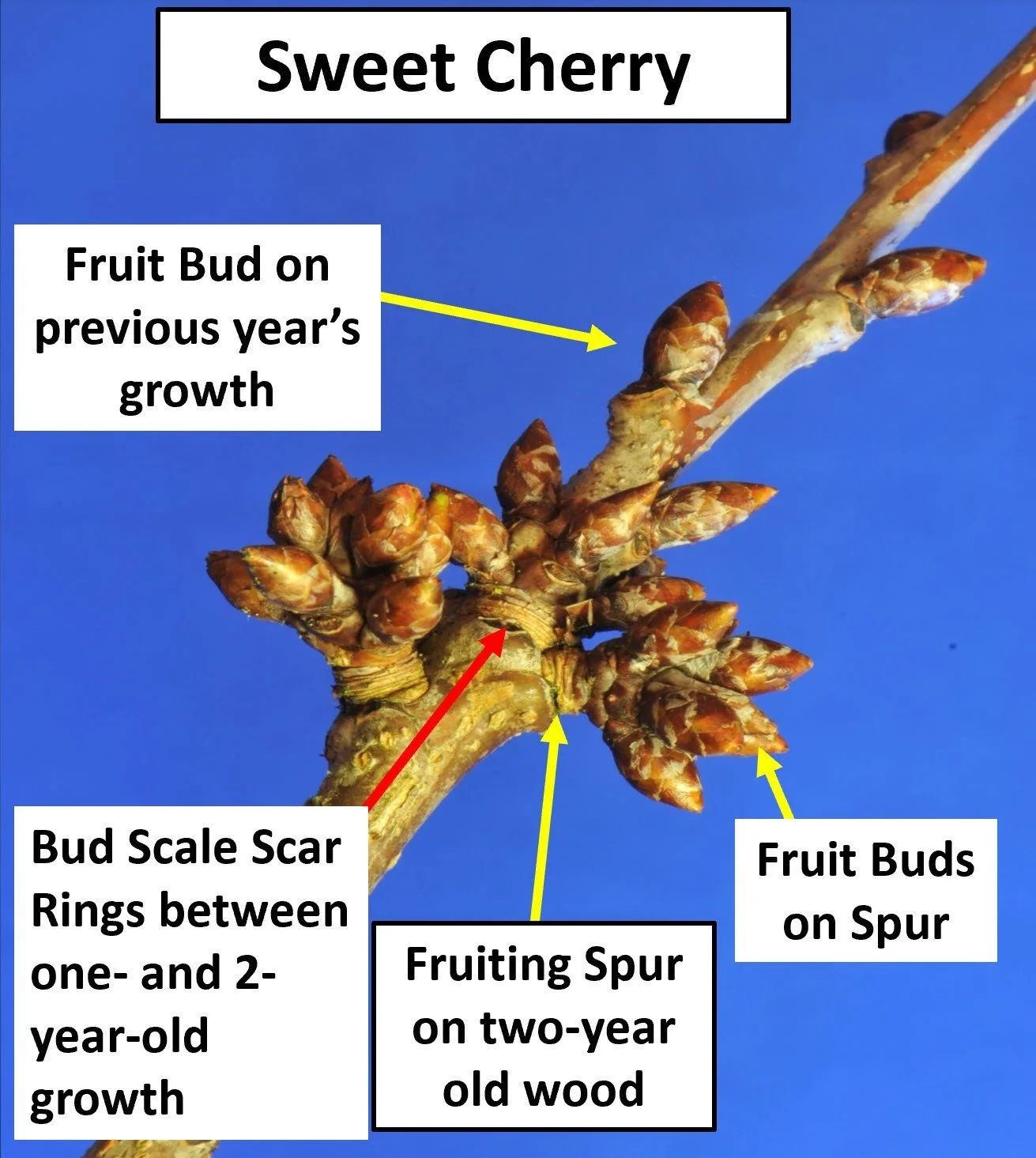
Sweet cherry fruit buds at the junction of one and two year old growth. Each flower bud typically contains 2 to 5 flowers. Sweet Cherry spurs usually produce fruit for 10 to 15 years so co not need to b e renewed very often. Acid (sour) cherry spurs produce well for 5 to 7 years.
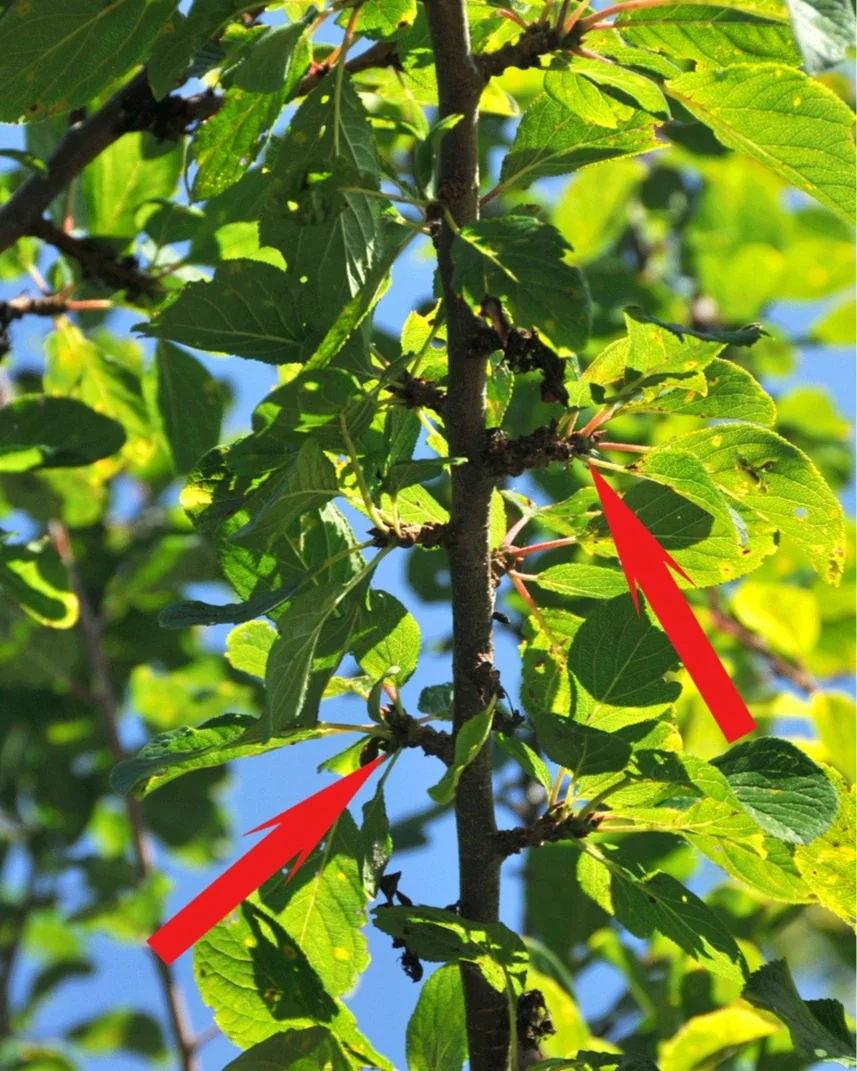
Apricot fruiting spurs. Spurs usually last 2 to 3 years and then should be renewed. Apricots also produce fruit on shoots that grew the previous year. Each apricot flower buds usually contain one flower.
Pear Bud Clusters on Fruit Spurs
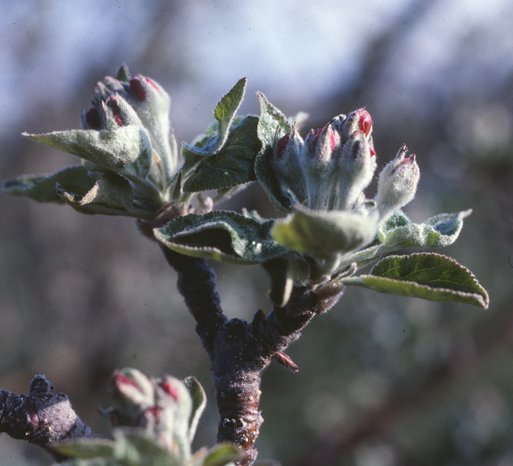
Apple Bud Clusters on Spur
European Pear Blossoms at Full Blooom
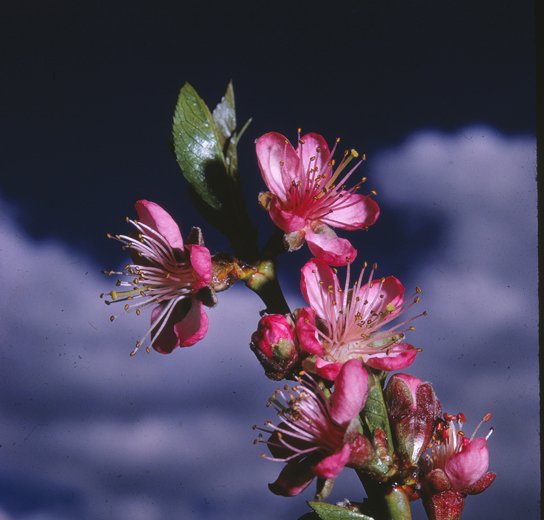
Peach at Full Bloom
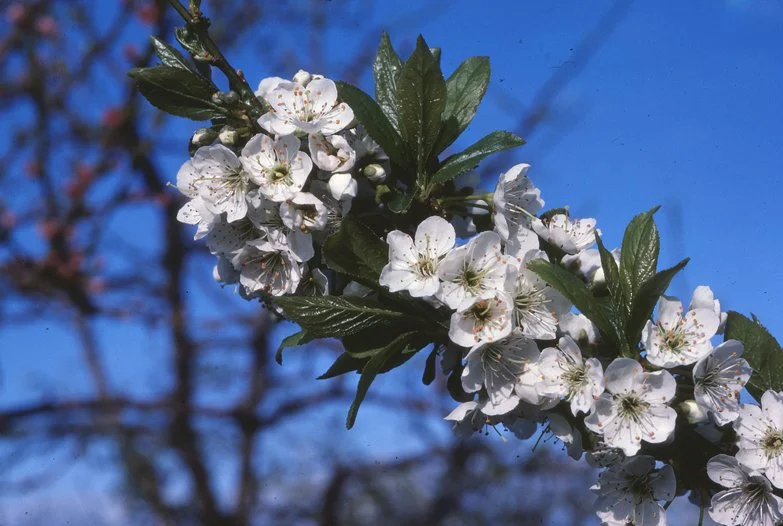
Sweet Cherry Blossoms are produced in Clusters on Fruit Spurs
Apple King Blossom (central) one or two days before side blossoms

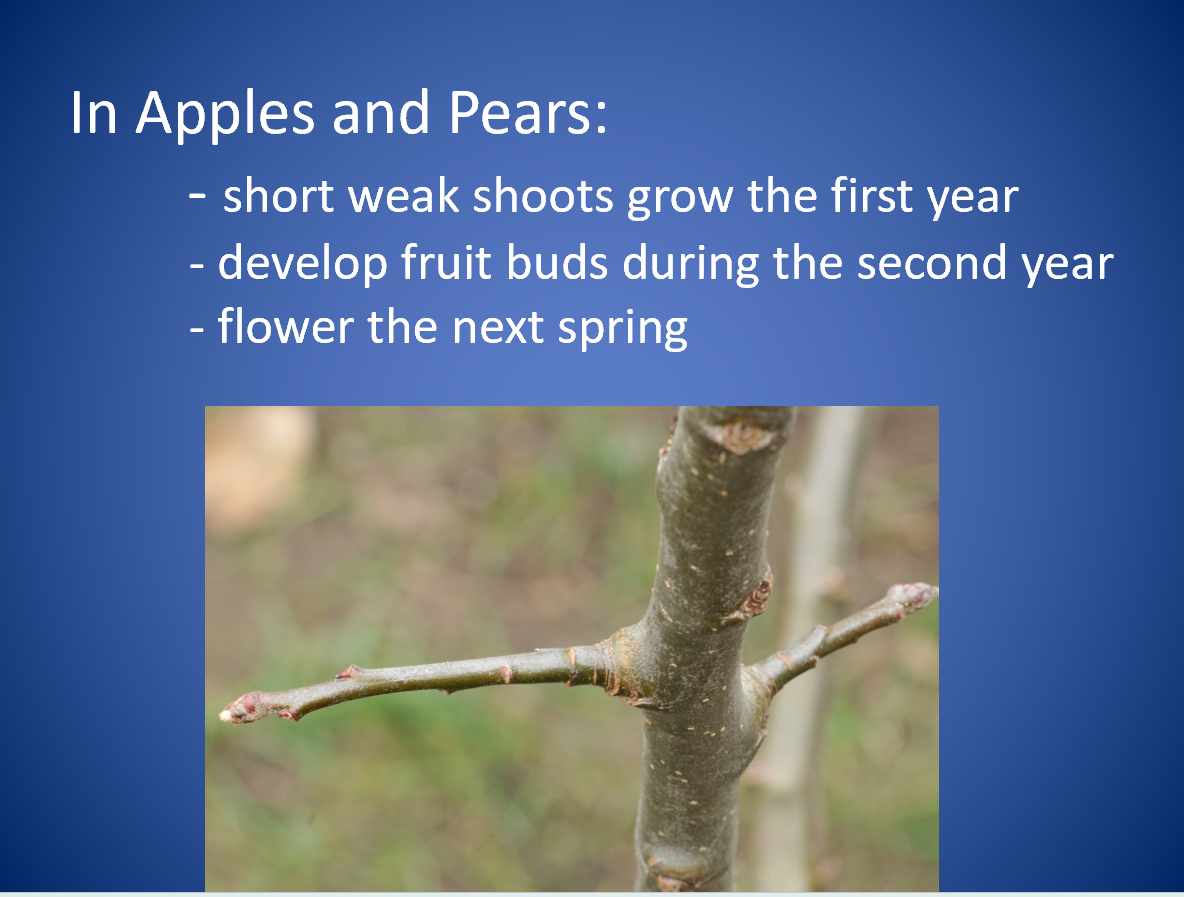
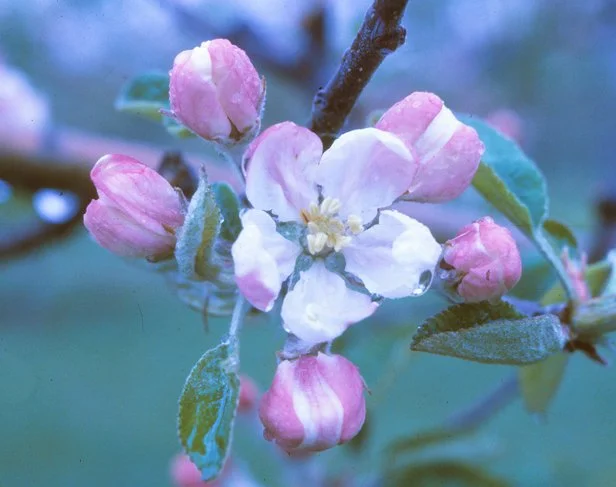
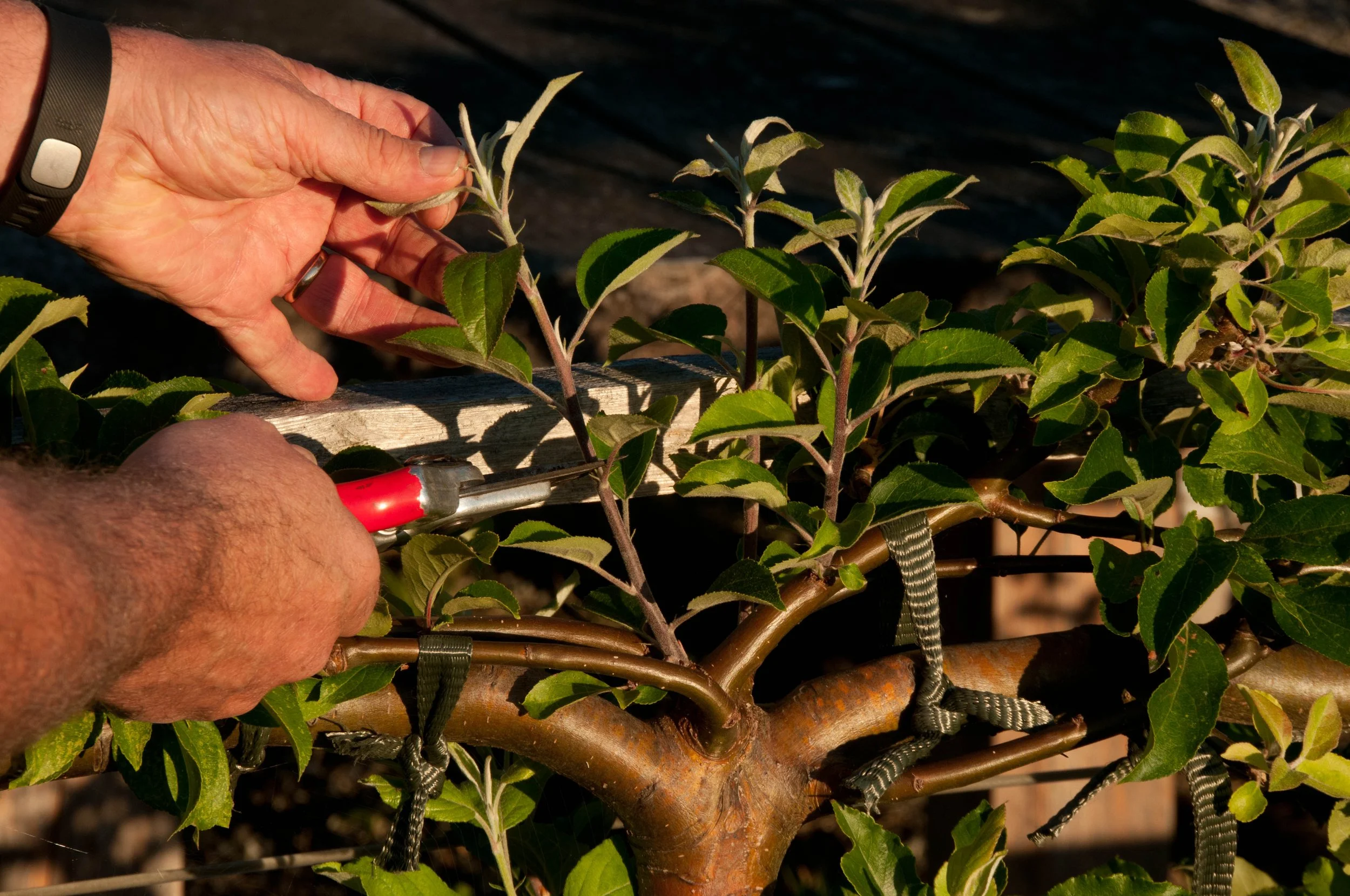
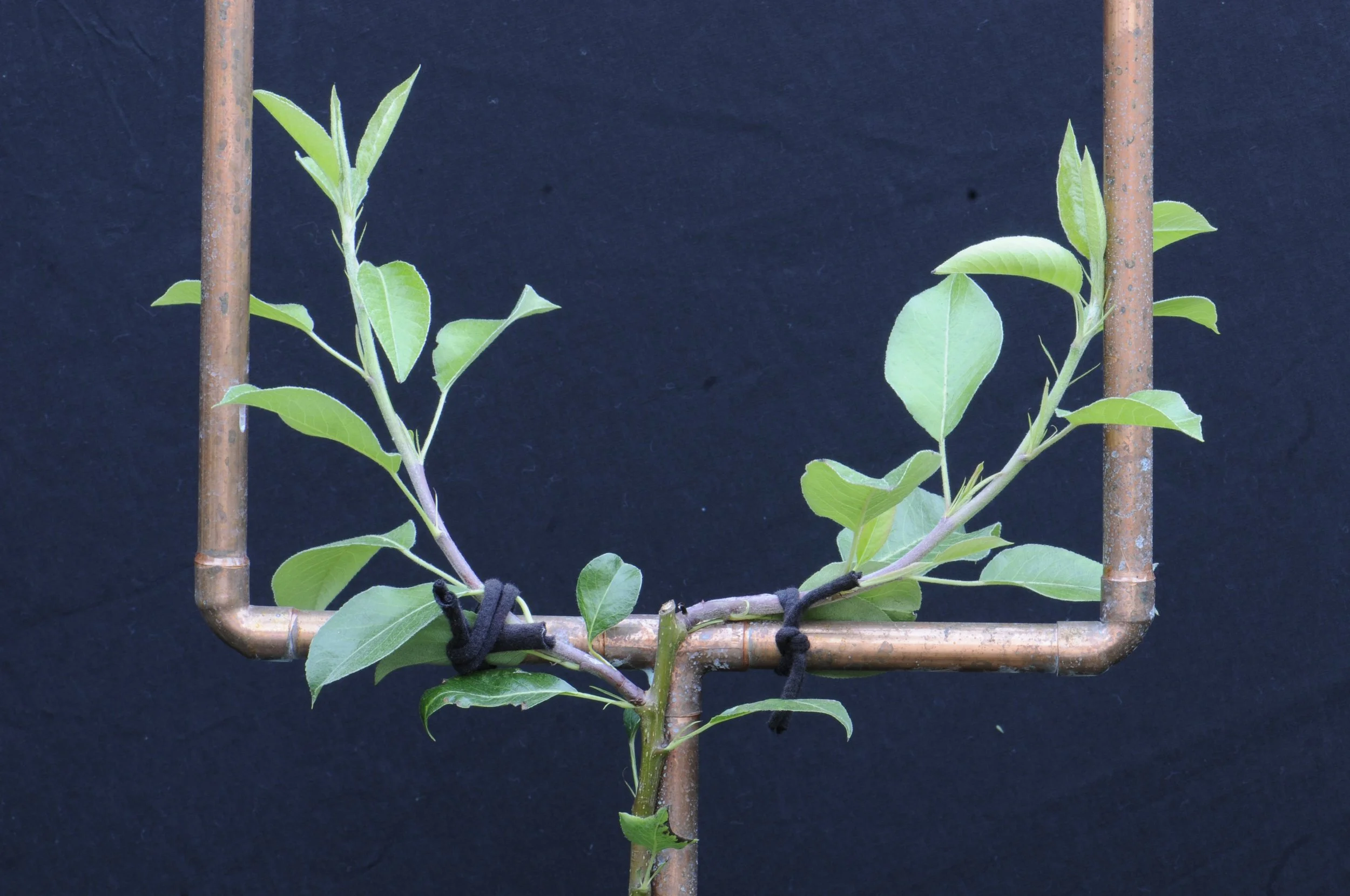
Apple and pear flower buds are mixed buds which means they contain blossoms, leaves and sometimes shoots. These new shoots are important to remember when training your espalier trees.
Apple and pear buds are mixed buds which means they contain both blossoms and at least one shoot.
Blossoms of Apples and Pears
Need image of shoot growing out beside flowers
Where fruit is produced on temperate fruit trees
Apples (Malus spp .) – most apples fruit on spurs on 2 year-old and older wood. Spurs are productive till about 7 years of age. Some varieties also fruit on tips of one year old lateral shoots.
Pears (Pyrus spp.) - most pears fruit on spurs on 2 year-old and older wood. the highest quality fruit develop on two-year-old spurs. Spurs last for up to 10 years. Some varieties also fruit on tips of one year old lateral shoots.
Nectarines (Prunus persica nectarina) – fruit on 1-year old wood.
Peaches (Prunus persica) – fruit on 1-year old wood.
Almonds (Prunus dulcis) – fruit on 1-year old wood and from spurs on 2-3-year old wood
Plums, European (Prunus domestica) – fruit on long-lived spurs on 2-year old wood and older.
Plums, Japanese (Prunus salicina) – fruit on 1-year old wood, and on short-lived spurs on older wood.
Apricots (Prunus armenica) – fruit on the lower part of one year old wood and on fruiting spurs. Apricot spurs typically fruit for 2-3 years, after which they become less productive.
Quinces (Cydonia oblonga ) – the majority of their fruit develops on the ends of shoots that grew the previous year. a few fruiting spurs develop on some varieties.
Cherries, Sweet (Prunus avium) – fruit on the lower lower parts of 1-year old wood and on long-lived spurs.
Cherries, Sour (Acid) (Prunus cerasum) – fruit on the lower lower parts of 1-year old wood and on long-lived spurs.
Figs (Ficus carica) – fruit on current season’s new growth Some varieties crop twice a year and produce an early breba crop on the tips of 1-year old wood and a main crop on current seasons growth.
Medlars fruit on current season's new growth
Persimmons fruit on current season's new growth